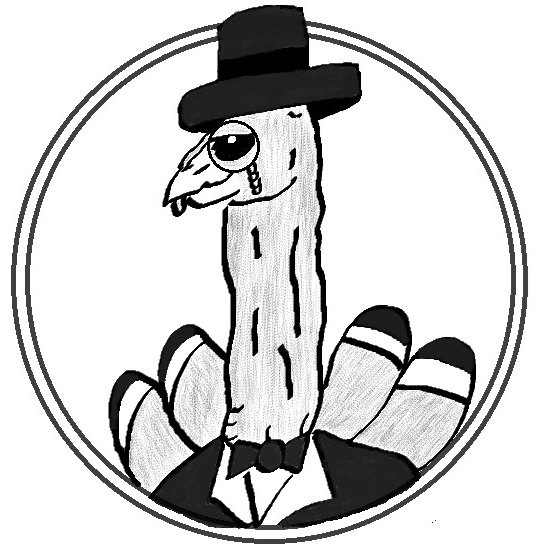

Image adapted from Lena Helfinger via Pixabay.
From the green and scaly to the soft and fluffy to that funky little guy that’s been living in your bathtub drain, the world around is inhabited by a wide variety of animal creatures. But for as long as humans have existed on this big, blue ball we call Earth, we’ve looked around at our buffalo brothers and snake sisters, gazed at our own murky reflections in the water of life, and asked, “You think you’re better than me?”
Animal intelligence has been a hot topic of scientific research for as long as humanity’s ego has remained fragile, but luckily for us, most studies have shown that, comparatively, other animals are pretty dumb. While many possess complex evolutionary advantages to survive extreme conditions that would quickly render us dead, they lack the intellectual facets that truly matter, such as using ChatGPT to write professional emails and the wisdom to simply not live in Florida in the first place. The closest non-human member of the animal kingdom to achieving true intelligence was perhaps the bonobo, Kanzi, who once defeated the ender dragon in Minecraft.
However, a large number of wildlife researchers have recently questioned previous assumptions on animal intelligence. Can we really compare the intelligence of other animals to our own? Are humans really as smart as we think they are? Is beating the ender dragon even hard? Questions like these have led to a new field of study: Animal humor.
It has long been an accepted fact that humor is linked directly to intelligence. I mean, after all, Conan O’Brien is a Harvard graduate. Thus, if it could be determined what various members of the animal kingdom find funny, it might shed light on the various forms of intellect they possess. This was where Dr. Clementine Cartier’s journey began.
“Ze animal brain is like ze child brain. Small. Shriveled. A pecker in the pool untouched by the warm, loving grasp of it’s creator. Untrained. Unburdened. Unknown.”
As you can probably tell, Cartier is just as pretentious as he is brilliant, but for what he lacks in the ability not to creep out everyone in a five-mile radius, he makes up for in the fact that he is French. Rising to fame after his discovery that Paris sewer rats are capable of doom-scrolling TikTok, he wondered if perhaps humankind had unrightfully placed itself on top of the animal kingdom’s intelligence pyramid. This is when he moved to Boston to lead MIT’s Animal Sophistication Syndicate and conduct experiments measuring the results of different forms of humor on animal subjects.
To some critics, however, it seemed Cartier was pulling his methods of experimentation out of his ass. Strangely enough, that was exactly what he was doing.
“We started with ze toots and poots,” claimed Cartier. “At first, we merely played back ze sounds for a room of canines. No response. No laugh. Then we smelled them some farts. Improvement. Much improvement. No laugh, but curious whiffs.”
While Cartier was unable to extract a single laugh from his Doberman group, he had much more success with the hyenas, who appeared to laugh even when not in the presence of flatulence. At first, this led the doctor to believe hyenas possessed psychokinetic abilities that allowed them to pick up on extra-dimensional gas. That hypothesis was quickly tossed out in favor of the much more plausible answer that hyenas’ barks naturally sound like human laughter, while most animals were incapable of emitting such a noise. Not all laughter was the same, but if most animals didn’t “laugh” at jokes, how could we detect what they did or didn’t find funny?
“To see ze size of ze vessel, you look for ze wake in ze water.”
But attempting to measure the brainwaves of his subjects when exposed to various forms of comedy produced even stranger results. For example, nearly all dogs tested high when exposed to potty, sex, and “yo mama” jokes, but tested poorly when exposed to existential and dark humor. Gorillas and other primates, however, adored anything even remotely nihilistic. The caterpillars, flies, and worms lacked brain activity in most tests, but spiders did respond slightly when brought into a bathroom to observe a toilet being flushed. Horses, pigs, and other barnyard animals responded well to skateboard fail compilations, and cows absolutely adored wholesome dad jokes.
It appeared that humor was a universal fact of life across the animal kingdom, and Cartier even recorded activity that showcased animals exchanging complex jokes with one another that previously went unnoticed by humans. While his work had the potential to change everything we knew about our place amongst Earth’s creatures, there was still one result of the tests that perplexed the doctor.
“No matter what I do. Whoopee cushion. Steal ze nose. American politic. The pussy, it do not laugh.”
Cartier tried everything to uncover the cats’ sense of humor, but from calicos to cheetahs, it was to no avail. It seemed that for whatever reason, cats lacked a funny bone altogether, and that led the doctor to wonder: Is there actually a body part responsible for an organism’s sense of humor? Many would assume it was rooted in some part of the brain; however, the work of one disgraced scientist claimed otherwise.
Cartier decided to risk his credibility by consulting the research of a once distinguished UMass Boston professor, Dr. Edgar Glute. A couple years ago, Glute made headlines for performing the world’s first human-baboon butt transplant. The reason? To see if a human’s sense of humor could be transferred to a baboon. You see, Glute hypothesized that humor wasn’t actually stored in the mind, but was instead generated by the rear.
While Glute’s experiment backfired horrendously resulting in the baboon subject gaining god-like consciousness and the human subject morphing slowly into a giant ass monster Jeff Goldblum style (I’m referencing “The Fly,” not calling Jeff Goldblum an ass, just to be clear) it did prove that the badonkadonk holds more secrets than initially believed. Glute was later arrested on charges of animal cruelty as well as attempting to combine the severed asses of two college humorists to obtain the “master ass” and unlock unlimited comedic power. That being said, Cartier’s studies seemed to directly back up Glute’s proposed Comedia Asinus Theory.
“I was in disbelief. Then I measured ze waves of ze donkey.”
When running tests on a donkey, Cartier recorded mental laughter stronger than in any of his previous subjects. The donkey was capable of finding humor in anything and everything as if the entirety of life was simply a joke. Ironically enough, it was the ass of the animal kingdom that exhibited the strongest capacity for humor. Was this a coincidence, or had Cartier accidentally proved the theories of a lunatic? It seemed even more likely when the doctor realized that felines lack any form of butt cheeks; they simply stop at the end and go straight down, flat. No ass at all. It was all coming together.
Unfortunately for Cartier, the scientific community had taken a strong stance against anyone who dared link butts to humor, leading to widespread backlash and mockery upon the publishing of his research paper which cited Glute’s previous work. He may have proved that humans aren’t the only animals capable of cracking a joke, but in doing so, he tanked his own career as a respected scientist and wildlife researcher. Fittingly, Cartier’s last public statement before returning to Paris wasn’t just poignant, but also in good humor.
“We humans are not so different than ze creatures we share this pretty world with. We fight for ze survival, we long for ze love, and we share in ze laughter. But alas, that laughter stems from ze one universal truth that connects us all. We all have ze ass, and they all have ze stink.”





Leave a comment